
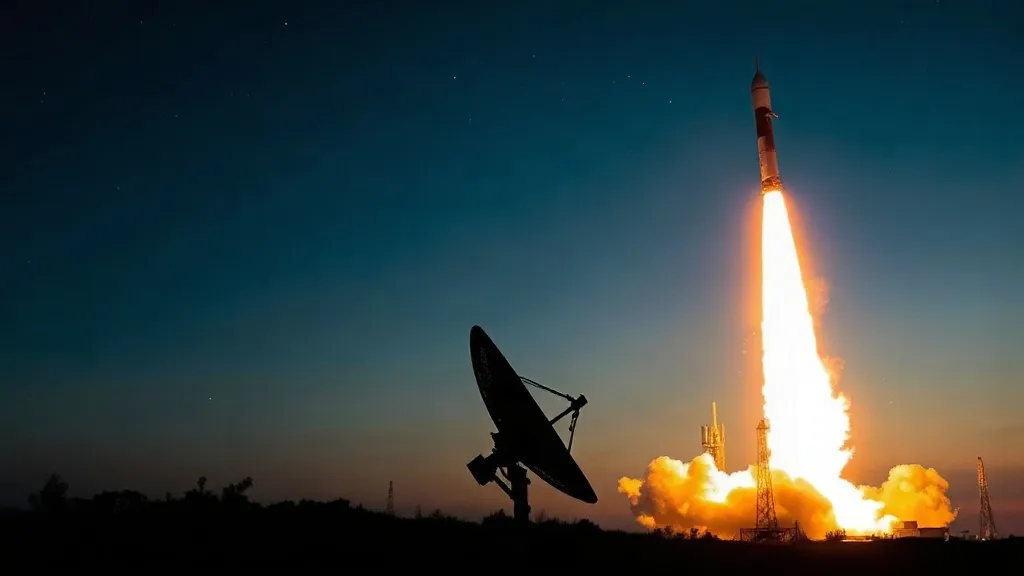
On November 15, a United Launch Alliance (ULA) Vulcan Centaur rocket lifted off from Cape Canaveral with 40 satellites for Amazon's Project Kuiper, the company's ambitious broadband constellation. Instead of reaching orbit, the mission ended in failure, destroying the payload and dealing a significant blow to Amazon's plans to compete with SpaceX's Starlink. The news sent ripples through the space industry and raised questions about Amazon's timeline, its partnership with ULA, and the broader competitive landscape. For SpaceX, it's a clear win. For Amazon, it's a costly setback. And for investors, it's a reminder that Amazon's stock, even after a rough 2022, isn't exactly a bargain.
The Failure: What Went Wrong
Details are still emerging, but early reports indicate a failure occurred during the second-stage burn, preventing the rocket from achieving the necessary velocity to reach orbit. The 40 satellites, part of Amazon's planned constellation of 3,236, were lost. This is the first major failure for Vulcan Centaur, which had previously flown successfully. ULA CEO Tory Bruno called it a "difficult day" and pledged to investigate thoroughly. Amazon, meanwhile, expressed disappointment but vowed to continue. "We're committed to Project Kuiper and will work closely with ULA to understand the cause and return to flight," an Amazon spokesperson said.
The loss of 40 satellites is a setback, but it's not catastrophic. Amazon has launched only a handful of prototypes so far, and full-scale production is still ramping up. However, the failure could delay the first commercial service, which Amazon hopes to begin by late 2024 or early 2025. That delay gives SpaceX more time to extend its lead.
Why It's Good News for SpaceX
SpaceX's Starlink is far ahead. With over 4,000 satellites in orbit and millions of subscribers, Starlink has a massive head start. Amazon's Kuiper is still in its infancy, and every setback widens the gap. The Vulcan failure not only delays Kuiper but also raises doubts about ULA's reliability. Amazon has contracts with ULA, Arianespace, and Blue Origin for launches, but ULA was expected to handle a significant portion. A prolonged investigation could ground Vulcan for months, forcing Amazon to rely on other providers, some of which are also behind schedule.
SpaceX, on the other hand, has a proven track record. Its Falcon 9 rocket has a near-perfect success rate, and the company is constantly launching Starlink satellites. The failure of a competitor's rocket only strengthens SpaceX's position as the dominant player in the commercial launch market and satellite broadband. SpaceX's lead in the internet satellite race just got more comfortable.
Amazon's Broader Challenges
Project Kuiper is a massive undertaking. Amazon has committed over $10 billion to the project, and it's one of the company's biggest bets outside its core retail and cloud businesses. The goal is to provide high-speed internet to underserved areas, a market that SpaceX is already tapping. But Amazon faces not only technical hurdles but also regulatory ones. The FCC requires Amazon to launch at least half of its constellation by 2026, and the clock is ticking. A failure like this makes that deadline harder to meet.
Moreover, Amazon's core businesses are under pressure. Retail growth has slowed, and AWS, while still a profit engine, faces increased competition from Microsoft and Google. The company's stock has fallen significantly from its pandemic highs, but it's still not cheap by traditional metrics. Amazon's stock remains expensive relative to its earnings growth.
What This Means for Investors
For investors, the Vulcan failure is a reminder of the risks in Amazon's ambitious projects. While the company has a history of bouncing back, the satellite internet venture is capital-intensive and highly competitive. The failure doesn't change the long-term thesis for Amazon, but it does highlight the challenges. If you're a shareholder, you might be tempted to buy the dip, but consider the valuation. Amazon trades at a premium P/E ratio, and its free cash flow has been negative in recent years due to heavy investments. The stock may not be the bargain it was in late 2022.
On the other hand, SpaceX isn't publicly traded, so investors can't directly benefit from its success. However, companies that supply SpaceX or benefit from its growth could be opportunities. For now, Amazon investors should focus on the company's ability to execute on Kuiper and manage costs.
Frequently Asked Questions
What exactly happened to the Vulcan rocket?
The Vulcan Centaur rocket, built by United Launch Alliance, experienced an anomaly during its second-stage burn, preventing it from reaching orbit. The 40 Amazon Kuiper satellites it carried were destroyed. The cause is under investigation.
How many satellites does Project Kuiper plan to have?
Amazon plans to deploy a constellation of 3,236 satellites in low Earth orbit to provide global broadband internet. The 40 lost satellites were part of the early production batch.
Will this delay Amazon's satellite internet service?
It likely will. Amazon had hoped to begin commercial service by late 2024 or early 2025, but the failure may push that timeline back, especially if Vulcan is grounded for an extended period.
Is SpaceX's Starlink now unstoppable?
SpaceX has a significant lead, but the market is large enough for multiple players. Amazon's deep pockets and determination mean Kuiper could still become a viable competitor, albeit later than planned.
Should I buy Amazon stock after this news?
That depends on your investment strategy. The failure is a setback but not a fatal blow. However, Amazon's valuation is still high, and the stock may not be cheap enough for value investors. Consider your risk tolerance and long-term outlook.