
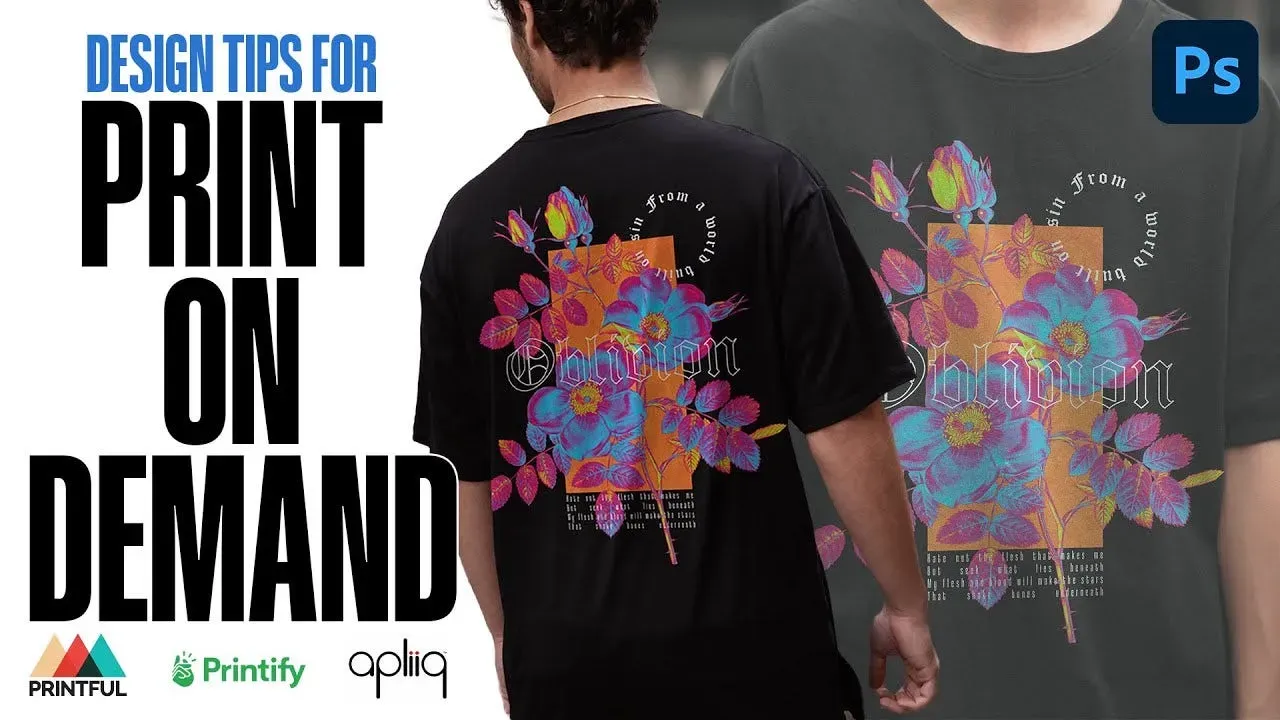
Print On Demand for Apparel is reshaping how brands move from creative ideation to delivering wearable products to customers. In a competitive ecommerce landscape, this model lets designers test concepts without the risk of overproducing inventory, while enabling limited editions and personalized drops. Smart use of the apparel design workflow helps translate concepts into production-ready assets that meet color, fabric, and print constraints. Choosing reliable POD providers and clear fulfillment strategies keeps costs predictable and speeds time to market. This introductory overview outlines practical steps to turn a concept into a ready-to-ship garment while prioritizing quality, cost, and customer experience.
Beyond the term Print On Demand for Apparel, this approach is described through alternative terms such as on-demand clothing production and made-to-order fashion. Brands benefit from short-run garment printing, test-driven drops, and flexible merchandising that minimize waste and risk. The end-to-end process still starts with design concepts, moves through digital mockups, and ends with customer-ready shipments. Using terms like digital textile printing and customized garments helps broaden audience reach and aligns content with related searches. Overall, the model emphasizes speed, flexibility, and responsible production while keeping the focus on the customer experience.
Print On Demand for Apparel: From Ideation to Limited Edition Drops
Print On Demand for Apparel reshapes how brands move from concept to consumer by removing the risk of overproduction. With POD clothing, designers can test concepts, colorways, and fabrics in small runs before committing to a full line. This approach aligns with the apparel design workflow by letting insights from early feedback guide iterations, ensuring that what ships is aligned with customer demand. On-demand apparel manufacturing also supports limited editions and personalized pieces, enabling brands to experiment with trend-driven drops without tying up capital. In practice, this means faster time-to-market and lower waste, which resonates with sustainability-conscious customers.
From concept to customer, the end-to-end process includes creating digital mockups, validating designs with stakeholders, and preparing print-ready files for production partners. Understanding the apparel design workflow helps teams align on fabrics, placements, and printing methods, reducing back-and-forth and errors. Once approved, the production partner handles on-demand apparel manufacturing, quality control, and fulfillment, delivering a ready-to-ship garment through POD fulfillment networks. This integrated approach lets brands scale drops, test new SKUs, and optimize margins without the burden of inventory obsolescence.
Choosing the Right POD Partner for Quality, Speed, and Scale
When evaluating POD partners, start with the product catalog and print capabilities to ensure they cover your target garments (tees, hoodies, hats) and your chosen methods such as DTG, sublimation, or screen printing. Review sample prints to judge color accuracy, fabric hand, and print durability, because consistent color across batches is essential for a cohesive brand look in POD clothing lines. Consider turnaround times and minimums, especially for limited-edition drops or evergreen designs that must scale with demand.
Other factors include quality control protocols, geographic reach, and integration options with your ecommerce platform. A robust QC process—such as batch checks and defect rate reporting—reduces returns and preserves brand reputation in on-demand apparel manufacturing. Compare pricing tiers and scalability options, ensuring the partner can grow with you while keeping margins healthy and your customers satisfied via reliable POD fulfillment.
Mastering the Apparel Design Workflow for Faster Production
An effective apparel design workflow starts with market research, mood boards, and rapid sketch iterations aligned to target customers and fabric capabilities. Clear alignment with the printing method helps you select suitable placements, colorways, and typography, reducing rework in later stages and speeding time to mockups.
Digital mockups and proofs bridge the gap between concept and production. By creating variations—different colorways, placements, and artwork scales—you validate what resonates with buyers before committing to production partners. This disciplined approach supports custom apparel printing goals, minimizes surprises during manufacturing, and feeds smooth POD fulfillment.
Printing Methods Demystified: DTG, Sublimation, and Screen Printing for POD Clothing
DTG excels at rich color gradients and fine detail on light fabrics, making it ideal for expressive art and photo-real designs in POD clothing. Sublimation embeds ink into polyester fibers for all-over prints with excellent durability, while screen printing offers cost-effective, high-coverage results for bold designs and larger batch runs.
Choosing a method depends on fabric choice, order volume, and margin goals. Color management and pretreatment requirements influence turnaround times and consistency across batches. Designers should balance fidelity with practicality, ensuring that the final print aligns with the brand’s aesthetic while remaining scalable within the POD fulfillment pipeline.
From Design to Dispatch: Integrating Your Store with POD Fulfillment
Seamless integration between your ecommerce platform and POD providers automates order routing, product synchronization, and POD fulfillment tracking. A connected workflow minimizes manual tasks and reduces errors, accelerating the path from checkout to doorstep for every print-on-demand order.
Beyond automation, maintain high-quality product imagery, consistent descriptions, and clear care instructions to support the customer experience. Effective POD fulfillment hinges on reliable packaging, real-time order status, and accurate shipping estimates, all of which reinforce brand trust as you scale without inventory risk.
Scaling and Sustainability: Growth Strategies for On-Demand Apparel Manufacturing
As your brand grows, you can evolve through hybrid models, near-shoring, or regional production while preserving the core benefits of POD. Scaling should balance experimentation with core lines, leveraging demand forecasting and tiered printing options to optimize margins and service levels across seasons.
Focus on sustainable practices within on-demand apparel manufacturing: water-based inks, energy-efficient printers, and packaging that can be recycled. Communicate sustainable options to customers to reinforce the value proposition and reduce waste, while maintaining the speed and customization that POD fulfillment enables.
Frequently Asked Questions
What is POD clothing, and how does it fit into the apparel design workflow?
POD clothing refers to garments that are produced on demand after a customer places an order. In the apparel design workflow, POD clothing enables designers to move quickly from concept to customer without large upfront inventories. The process typically includes market research, mood boards, sketch iterations, digital mockups, and proofs, followed by production with a POD method such as direct-to-garment (DTG), sublimation, or screen printing, and finally POD fulfillment to the customer. This approach lowers risk, supports limited editions, and helps maintain quality and cost control throughout the lifecycle.
How can on-demand apparel manufacturing and POD fulfillment help brands test ideas with minimal waste?
On-demand apparel manufacturing—and the associated POD fulfillment—allow brands to test concepts without producing excess inventory. By launching limited editions or pilot drops based on real demand, you only manufacture what customers actually purchase. This reduces waste, improves cash flow, and provides data on which designs, fabrics, and sizing perform best. Combine with high‑quality mockups and clear product details to drive confident pre-orders and rapid iterations in custom apparel printing.
What are the main printing methods in POD clothing, and how do they influence design decisions?
The core printing methods for POD clothing are direct-to-garment (DTG), sublimation, and traditional screen printing. DTG excels with detailed, multi‑color artwork on light fabrics and offers fast turnarounds for limited runs, while sublimation is ideal for all‑over vibrant prints on polyester or blends but works best with compatible fabrics. Screen printing is cost‑effective for larger runs and simple designs with strong durability. Your design decisions should consider fabric type, color fidelity, placement, and order volume to select the most suitable method for your POD clothing line.
What criteria should I use to choose a POD provider for on-demand apparel manufacturing and POD fulfillment?
When selecting a POD provider for on-demand apparel manufacturing and POD fulfillment, evaluate: (1) product catalog and print capabilities to ensure your garments and methods are supported; (2) print quality and color accuracy with sample tests; (3) turnaround times and ability to scale with demand; (4) minimum orders and pricing tiers; (5) robust quality control processes and defect handling; (6) fulfillment reach and shipping options; (7) platform integrations for seamless order routing and product synchronization; and (8) sustainability practices, including inks and packaging.
How can the apparel design workflow be aligned with store integrations to optimize POD fulfillment?
Aligning the apparel design workflow with store integrations streamlines POD fulfillment by automating order routing, product synchronization, and fulfillment tracking. Use ecommerce apps and plugins to connect your store with the POD provider, ensuring accurate proofs, real-time stock updates, and consistent product imagery and descriptions. A well‑integrated system reduces manual tasks, minimizes errors, and speeds up the path from order placement to customer delivery, all while maintaining the integrity of the POD clothing line.
What strategies maximize margins and promote sustainability in print on demand for apparel?
To maximize margins and promote sustainability in POD clothing, focus on: analyzing per‑unit costs (base garment, printing, setup, and shipping), using bundles or limited drops to spread fixed costs, and applying demand forecasting to reduce stockouts. Consider tiered pricing for premium options and durable finishes, and prioritize eco-friendly choices such as water‑based inks and recyclable packaging. Transparent sourcing and efficient transport can further improve margins while aligning with growing demand for responsible, sustainable on‑demand apparel manufacturing.
| Topic | Key Points |
|---|---|
| What is POD for Apparel? |
|
| Why POD is valuable |
|
| End-to-end process |
|
| What this guide covers |
|
| Understanding the POD Clothing Landscape |
|
| Design to mockup process |
|
| Printing methods and design implications |
|
| Choosing the right printing method |
|
| Partnering with POD provider |
|
| Integrating store with POD workflows |
|
| From design files to production-ready prints: file preparation essentials |
|
| Quality control and inspection: protecting your brand |
|
| Fulfillment and shipping: delivering the customer experience |
|
| Pricing, margins, and strategy for sustainable growth |
|
| Sustainability and the future of on-demand apparel manufacturing |
|
| Scaling your POD program: when to evolve beyond print on demand |
|
Summary
Print On Demand for Apparel reshapes how brands translate design into customer-ready garments with agility, quality, and accountability. A well-structured POD program hinges on a clearly defined apparel design workflow, careful selection of POD partners, rigorous quality control, thoughtful fulfillment, and a commitment to sustainability and cost optimization. By embracing the end-to-end process—from concept to customer—and continuously refining your approach based on data and customer feedback, you can build a resilient, scalable, and customer-centric apparel business that thrives in the era of on-demand manufacturing.